If you live in Minnesota, you know that September weather turns on a dime. One week you are sitting around the fire pit in shorts; the next, you are scraping early frost off your windshield.
Fall presents a unique dual challenge for homeowners. First, you have to winterize your yard before the ground freezes. Second, if you want a new patio, outdoor kitchen, or fire feature ready for the short, sweet summer months of 2027, autumn is the best time to start planning.
Managing both priorities at once does not have to feel overwhelming. To help you balance late-season plant care with long-term project goals, here is a quick overview of what needs immediate attention before the snow flies.
- Why winterize early in Minnesota? Early September frosts hit before young plants enter full winter dormancy. Rapid freezes split plant cells, while winter wind and sun reflection off deep snowpack cause sunscald on tree trunks and evergreen windburn.
- Why start a 2027 design this fall? Designing during the fall avoids the massive spring backlog across the Twin Ports and the Iron Range. It gives you 4 to 5 winter months to clear local municipal permits and HOA reviews, ensuring your project hits the ground the moment the spring thaw arrives.
- The Bottom Line: Take care of burlap wraps and root watering before Thanksgiving, and wrap up your outdoor living design concepts before the first major snowfall.
How to Protect New Plants from Early Frost
Planting shrubs and saplings in late summer or early fall is great for root development, but young plants do not have the deep root systems of mature oaks or pines. When a crisp September night drops below 32∘F, tender foliage takes a heavy hit.
The cold temperatures in Northern Minnesota are only half the battle. The real threats are sub-zero winds, heavy snowpack, and intense sunlight reflecting off fresh snow.
Step-by-Step Burlap Wrapping
Broadleaf evergreens (like rhododendrons and boxwoods) and tender conifers (like young arborvitae) suffer from winter desiccation. Cold, howling winds strip moisture straight out of the leaves. Because Minnesota ground freezes up to 4 or 5 feet deep, the roots cannot pull up water to replace what was lost.
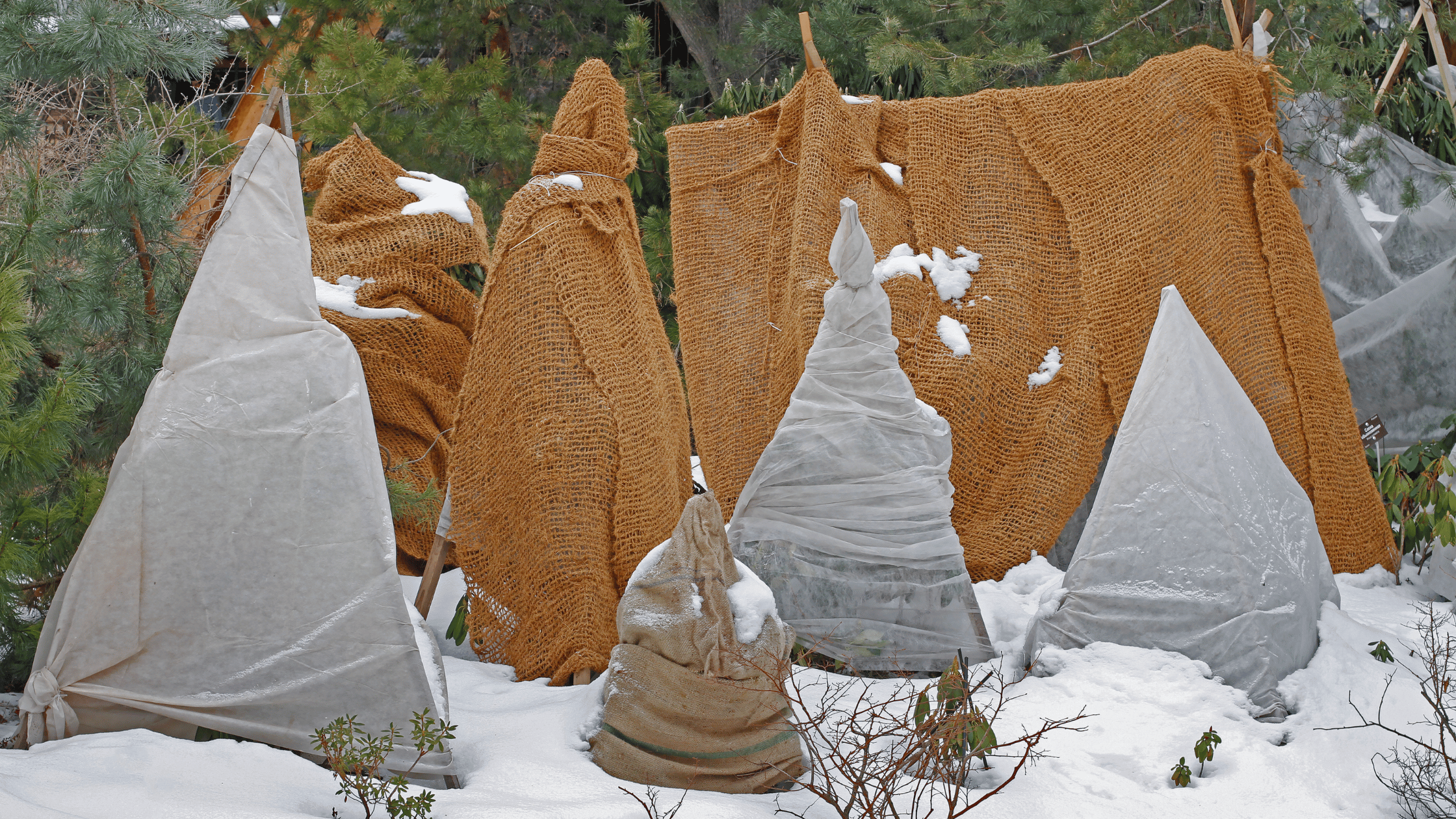
Burlap acts as a windbreak, taking the brunt of arctic gusts and heavy ice without smothering the plant.
How to Wrap Plants Correctly:
- Set Your Stakes: Drive three or four sturdy wooden stakes around the plant. Never wrap burlap directly against the foliage. Direct contact transfers freezing wet snow straight onto the leaves, causing tissue damage.
- Wrap the Frame: Wrap natural burlap around the outside of the stakes to create a wind barrier. Secure it tightly with jute twine.
- Leave an Air Gap: Keep the bottom of the burlap an inch or two above the soil line to maintain air circulation and prevent moisture buildup, which can breed fungus.
- Top Protection: If the shrub sits under an eave where heavy snow falls off the roof, cap the top of the stake frame with a piece of plywood or extra burlap.
Preventing Winter Sunscald on Young Trees
If you planted young maples, lindens, honey locusts, or fruit trees this season, their thin, smooth bark needs protection. Sunscald (or winter scalding) occurs on bright, freezing days—usually on the south or southwest side of the tree.
The low winter sun heats up the dark trunk, warming the cells and tricking them out of dormancy. As soon as the sun dips behind the treeline or clouds roll in, the temperature of the bark plummets below freezing in minutes. That sudden drop kills the active tissue, leaving long, vertical cracks in the trunk by spring.
How to Shield Your Trees:
- Apply Commercial Tree Wrap: Starting from the soil line, wrap light-colored, crinkled paper tree wrap upward in an overlapping spiral until you reach the lower branches.
- Timing Matters: Put wraps on in late October (before snow stays on the ground) and remove them in early April. Leaving wraps on during warm spring months invites insects and moisture rot under the bark.
- Mind the Snowline: In high-snow areas like the North Shore or Duluth heights, ensure the wrap extends at least 12 inches above the expected snowline to account for sun glare reflecting off the snowpack.
Fall Watering and Mulching for Stronger Roots
A dry winter is severe on new plantings. Moist soil holds heat significantly longer than dry soil, insulating root systems against deep frost penetration.
- Keep Watering Until the Ground Freezes: Give trees and shrubs a deep soaking once a week throughout September and October. Do not stop until the ground freezes solid (usually around late November in the Twin Cities, and earlier up north).
- Mulch Smart: Spread a 2 to 3-inch layer of shredded hardwood mulch around the base of the plant to trap moisture and ground heat.
- Ditch the "Mulch Volcano": Never pile mulch against the trunk. Leave a 3-inch gap around the base. Piling mulch against bark creates a warm, damp environment for mice and voles, who will happily chew through your tree's bark under the snowpack.
Why Autumn is the Best Time to Design Your 2027 Project
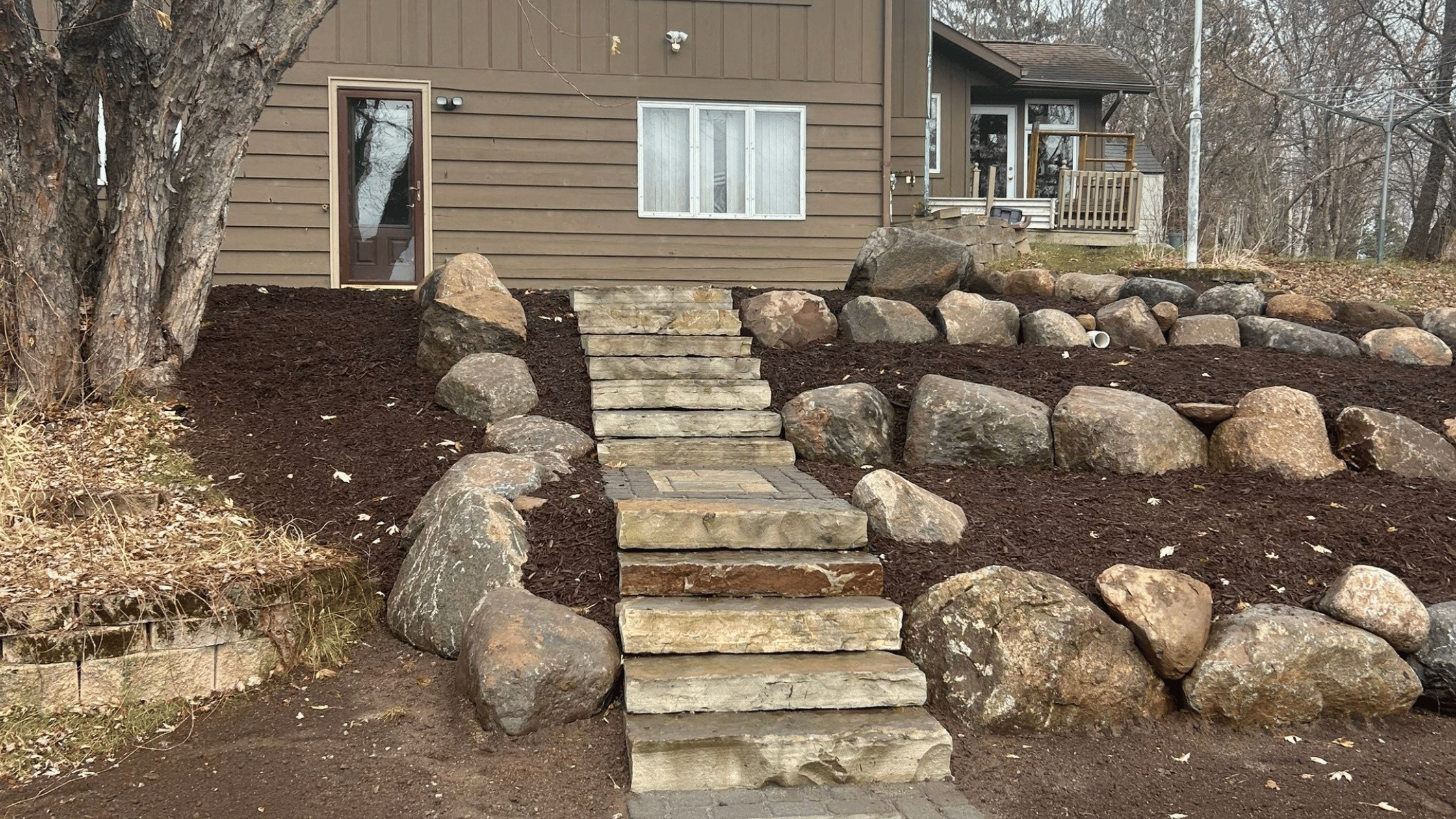
Once your yard is put to bed for the season, your attention can turn to your long-term outdoor living goals. If you are dreaming of an expansive paver patio, a custom outdoor fireplace, or a complete backyard renovation for 2027, starting the design process in the fall puts you months ahead of the game.
Minnesota’s outdoor living season is relatively short. Nobody wants to spend June, July, and August with a torn-up lawn waiting for construction permits to clear.
Beat the Spring Construction Bottleneck
When the first warm 60-degree day hits Duluth or the Iron Range, you wouldn’t believe how many homeowners are already trying to schedule their projects. Homeowners who wait until spring to start planning often discover that reputable contractors are already booked through mid-summer.
By starting your design work in autumn:
- You Grab the Best Construction Slots: Your project gets placed at the top of the spring build schedule. The moment frost leaves the ground and the soil dries out, crews can start excavating.
- You Avoid Rushed Choices: Designing over the winter gives you breathing room. You can tweak 3D layouts, select material colors, and adjust features without feeling pressed for time.
- Dedicated Contractor Focus: Autumn and early winter allow designers to spend more time refining custom features, lighting plans, and hardscape details with you.
Navigate Local Permitting and HOA Approvals
Getting approvals for structural outdoor work takes longer than most people think. The Twin Ports and northern municipalities may have strict rules regarding lot coverage, setbacks, utility easements, and shoreline management.
If you start this process in April, construction might not begin until July. By starting in October, all administrative hurdles, HOA meetings, and municipal permit reviews happen while snow is on the ground. When spring arrives, your project is fully cleared for shovels to hit the dirt.
Use Autumn Site Conditions to Improve Your Layout
Designing a backyard in peak summer can hide critical layout challenges behind full tree foliage. Autumn offers a clear, honest look at your property's real terrain.
Real Sightlines: Leaf drop reveals views of neighboring houses, sightlines, and roads. This allows designers to place privacy walls, pergolas, or screening trees where they matter most.
- Actual Drainage Patterns: Heavy autumn rains show how water flows across your property. Identifying low spots and runoff paths in fall allows designers to integrate proper grading, French drains, and retaining walls from day one.
- Winter Sun Angles: Seeing how low-angle sunlight strikes your yard in late autumn helps in positioning fire pits, outdoor heaters, and seating areas to maximize natural warmth during chilly spring and fall evenings.
Seasonal Action Schedule
Managing your yard and planning your future space go hand-in-hand. Use this simple schedule to stay organized through the seasonal transition: