When late September hits in the Northland, most homeowners are wrapping up outdoor chores. Docks come out of the water, boats get winterized, and garden beds get cleared out for the season.
Before you put your shovels away for the winter, there is one last project worth doing.
Late September through October is the window to plant spring-blooming bulbs. Burying cold-hardy bulbs now gives you something active to look forward to during the long winter months ahead. When the snowpack finally melts in late April, these early risers break through the thawing dirt and bring bright color back to your yard weeks before anything else starts growing.
Here is a practical guide to choosing, designing, and planting bulbs that actually survive Climate Zone 3 (the Iron Range) and Zone 4 (Duluth and the Twin Ports).
Why Fall Bulb Planting Works in Northern Minnesota
Spring-blooming bulbs need a long, cold freeze to bloom properly—a biological cooling process called vernalization. They require 12 to 16 weeks of continuous soil temperatures between 35°F and 45°F to break down dormancy hormones and trigger their flowering cycle.
Northern Minnesota winters give bulbs the exact cooling period they need. When you plant in late September or early October, the bulbs spend a few weeks growing a solid root system before the ground freezes solid. They sit dormant under the snow all winter, ready to push up flowers as soon as the ground thaws in spring.
What Works Here: Zone 3 and Zone 4 Bulb Varieties
Not all spring bulbs can handle a Minnesota winter. While Zone 5 and 6 gardeners can plant delicate hybrids, Northland landscapes need rugged varieties that survive deep freezes, heavy snowpack, and late spring cold snaps.

Early April Snow Melters
These low-growing plants bloom early, often pushing right through lingering patches of snow in April.
- Siberian Squill (Scilla siberica): Zone 3 hardy. Grows 4–6 inches tall with bright cobalt-blue flowers. Scilla is tough, spreads naturally over time to cover lawn borders or tree skirts, and easily handles deep Iron Range freezes.
- Snowdrops (Galanthus nivalis): Zone 3 hardy. Grows 4–6 inches tall with small, nodding white bell flowers. Deer and rabbits leave them alone, and they do exceptionally well in shady spots under hardwood trees.
- Glory-of-the-Snow (Chionodoxa luciliae): Zone 3 hardy. Grows 5–8 inches tall with blue and white star-shaped flowers. They come up right alongside Scilla and provide early food for emerging native pollinators.
Mid-Spring Varieties: Late April to May
Once the ground thaws completely, these classic garden flowers take over.
- Daffodils (Narcissus spp.): Zone 3 hardy. Grows 6–18 inches tall in yellow, white, peach, and bi-color options. Daffodils are 100% critter-proof. Deer, rabbits, squirrels, and voles will not eat them because the bulbs contain an alkaloid compound called lycorine that is naturally toxic to animals.
- Botanical / Species Tulips (Tulipa tarda, T. kaufmanniana): Zone 3 hardy. Grows 6–10 inches tall. Unlike big hybrid tulips—which act as deer candy and rarely come back after one harsh winter—wild Botanical Tulips are low-growing perennials that return year after year in cold soil.
- Grape Hyacinth (Muscari armeniacum): Zone 4 hardy (protected microclimates in Zone 3). Grows 6–8 inches tall with tight clusters of deep blue flowers. They look great planted next to yellow daffodils and stand up well to late spring snowfalls.
Late Spring: May into Early June
- Ornamental Alliums (Allium 'Purple Sensation', A. giganteum): Zone 3 hardy. Grows 18–36 inches tall with large purple globe flowers. Alliums belong to the onion family, so deer and rabbits completely avoid them. They bloom right as early spring bulbs finish up, bridging the gap between spring and summer perennials.
Simple Landscape Design Tips for Northland Yards
Planting bulbs effectively is about placement and grouping so your yard looks full rather than patchy when spring arrives.
Plant in Clusters, Not Straight Lines
Straight lines of single flowers look sparse and unnatural. Plant your bulbs in informal groups, drifts, or teardrop clusters of 10 to 25 of the same variety for a full, natural look along retaining walls, entryways, and garden beds.
Layer Your Bulbs ("Bulb Lasagna")
If you have limited space near a patio, front walkway, or porch, use the multi-layer planting technique. Dig a hole 8 to 10 inches deep and place large bulbs like Daffodils or Alliums at the bottom. Cover them with 2 inches of dirt, then place smaller bulbs like Botanical Tulips or Muscari on the second layer. Add another 2 inches of dirt and scatter small, early bulbs like Scilla or Snowdrops near the surface before filling in the rest of the soil and mulch. This method gives you continuous blooms in a single footprint from mid-April through late May.
Pair Bulbs with Native Perennials
As spring bulbs finish blooming, their leaves turn yellow and die back. That foliage must be left alone for 4 to 6 weeks so the bulb can absorb sunlight for next year's bloom. To hide dying foliage, plant your bulbs directly alongside late-emerging Minnesota perennials like Hostas, Daylilies, Peonies, or Coral Bells (Heuchera). The expanding perennial leaves naturally grow up and cover the fading bulb leaves right when they start looking messy.
How to Plant Bulbs in Northern Minnesota
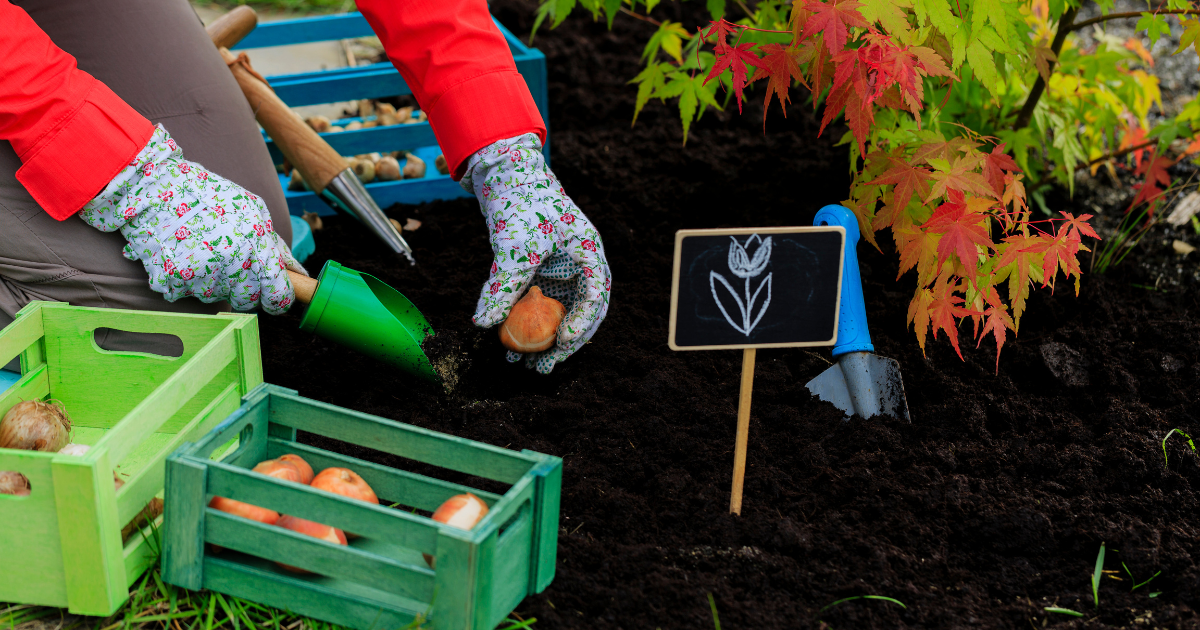
Follow these field-tested guidelines to make sure your bulbs take root before the ground freezes solid.
Timing
Plant between late September and mid-October. You want night temperatures consistently in the 40s and soil temperatures below 60°F. Finish planting at least 2 to 3 weeks before the ground freezes solid (usually November in Duluth and the Range). Planting too early while the soil is warm can force green shoots to pop up before winter, which drains the bulb's energy. Planting too late doesn't leave enough time for root growth before the dirt freezes.
Depth and Orientation
The standard rule is to plant bulbs three times deeper than the height of the bulb itself. Large bulbs like Daffodils and Alliums should be planted 6 to 8 inches deep and spaced 4 to 6 inches apart. Small bulbs like Scilla and Snowdrops should be planted 3 to 4 inches deep and spaced 2 to 3 inches apart. Always plant with the pointed tip facing UP and the flat root end facing DOWN. If you can't tell which side is which, plant the bulb on its side—the stem will naturally grow up toward light while roots grow down.
Soil Prep for Northland Dirt
Bulbs will rot if they sit in standing water over the winter. Soil varies across our region—from heavy red clay around Duluth and Superior to thin, rocky ground across the Iron Range. For heavy clay soil, dig your hole 10 to 12 inches deep and mix in organic compost or peat moss to break up the clay and improve drainage. Mixing a handful of Bone Meal or a high-phosphorus bulb fertilizer into the bottom of the hole gives the bulb a strong root foundation.
Water Thoroughly After Planting
Once covered with dirt, soak the area well with water. This settles the soil, removes air pockets around the bulb, and hydrates the tissue to trigger root growth before freezing weather sets in.
Mulching After the Hard Freeze
Wait until the top inch of dirt freezes (usually early November) before laying down 2 to 3 inches of shredded hardwood bark mulch or leaves. Mulching too early insulates the ground and keeps the soil warm when it should be cooling. Mulching at the right time keeps soil temperatures steady, preventing freeze-thaw cycles that can heave bulbs up out of the dirt during early spring thaws.
Dealing with Local Wildlife and Critters
Wildlife is part of living in the Northland, and hungry animals can ruin a bulb bed if you don't plan ahead.
Stick to Critter-Proof Varieties
The easiest way to keep animals from digging up your yard is planting species they refuse to eat. Animals naturally avoid Daffodils, Alliums, Snowdrops, Siberian Squill, and Fritillaria. On the other hand, standard Tulips and Crocus act like candy for deer, squirrels, and chipmunks.
Protecting Tulips
If you choose to plant classic tulips, protect them from digging pests using physical barriers. Lay a piece of 1/2-inch chicken wire or hardware cloth flat over the soil after planting your tulip bulbs. Anchor it with landscape staples, then cover it with mulch. Stems grow right through the wire mesh in spring, but squirrels cannot dig down to steal the bulbs in the fall. Granular blood-meal or predator-urine repellents spread over the soil after planting also discourage chipmunks and squirrels from digging in fresh dirt.
Plan Your Outdoor Space with Boulder Creek Outdoor Living
A little work in the fall goes a long way when spring rolls around. If you want help designing your landscape, building custom stone retaining walls, or creating outdoor living spaces built to handle Northland winters, Boulder Creek Outdoor Living is here to help!